Is there such a thing as too many Danish pastries?
Why, no, there is not. At least when you're eating them in Copenhagen, as I discovered in December when I spent a chilly week in Denmark's capital city. My lap and my tabletop and my enormous fake fur coat were continually showered with flakes of shattery, many-leaved pastry or soft crumbs of brioche. Sometimes both.
Within easy walking distance of my centrally located hotel, there were two fabulous bakeries in which I made myself at home, plus several highly regarded ones I didn't even get around to. I was in heaven, because there are few things I love more than pastries fashioned by rolling butter repeatedly into a yeasted dough that puffs into many evanescent layers as it bakes.
This baked-goods genre is called Viennoiserie (croissants are a classic example), although the sweet versions are often called Danish pastries. In one of those twists of culinary history, Danish pastries in Denmark are known as wienerbrød, or Vienna bread—since the method was imported by 19th-century Austrian bakers when Danish bakers went on strike. The Danes pumped up the eggs and butter to produce the style that has since spread around the globe.
I inevitably peer into the depths of such pastries as if they were one of those vintage sugared Easter Eggs fitted out inside with miniature scenes. All those intricate layers suggest worlds within worlds.
Here at the source, I kept surprising myself with how many pastries I could consume at a single sitting. I slept late on my first full day in town, then staggered a few blocks to Buka, a narrow slot of a bakery where bundled-up Danes had crowded in for what the Swedes would call their midafternoon fika break. There, along with a dead-serious flat white, I got one of the bakery's famous glazed and pinnacled cardamom pastries and a twisty tebirkes bun, in which poppyseeds and marzipan paste met crystalline granules of confectioner's sugar.
Oh, what a mess I made. The tebirkes turned out to be strangely satisfying in a way that any Texan who has ever savored an old-school poppyseed kolache would understand: ribboned with dark, earthy poppy grit and sweetly nutty almond paste. Weird and oddly beguiling to this American palate, in a "glad I ate that but might not ask for seconds" fashion.
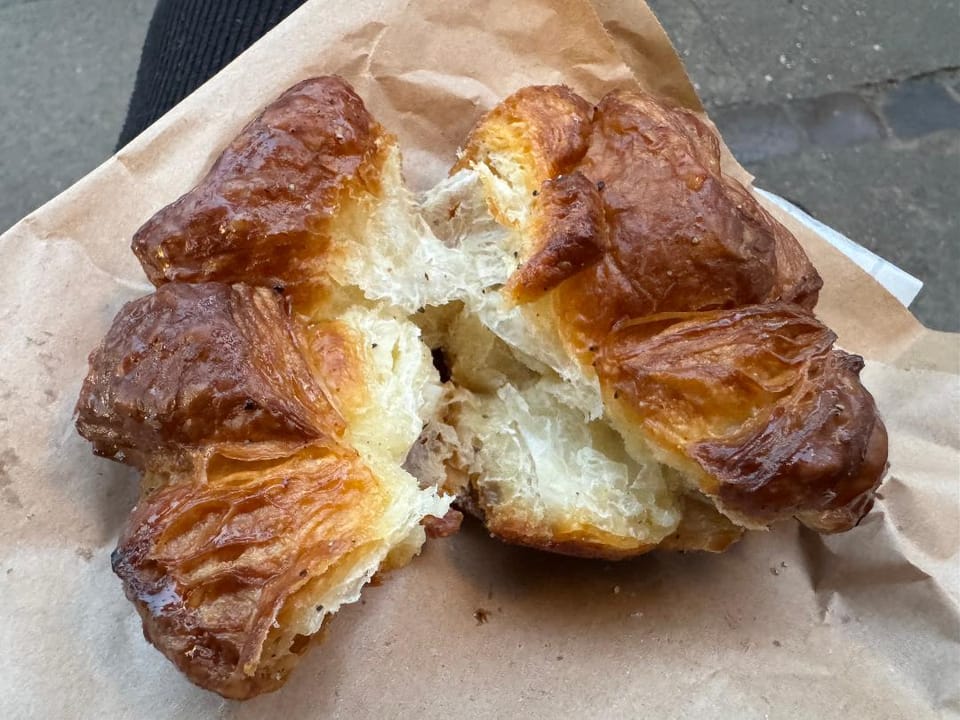
The so-called cardamom "brioche," which was more of a turret-shaped laminated confection, rained down a storm of pastry shards and left me convinced that the combo of butter, sugar and cardamom is divinely inspired. Like, the stuff of whatever gods you believe in.
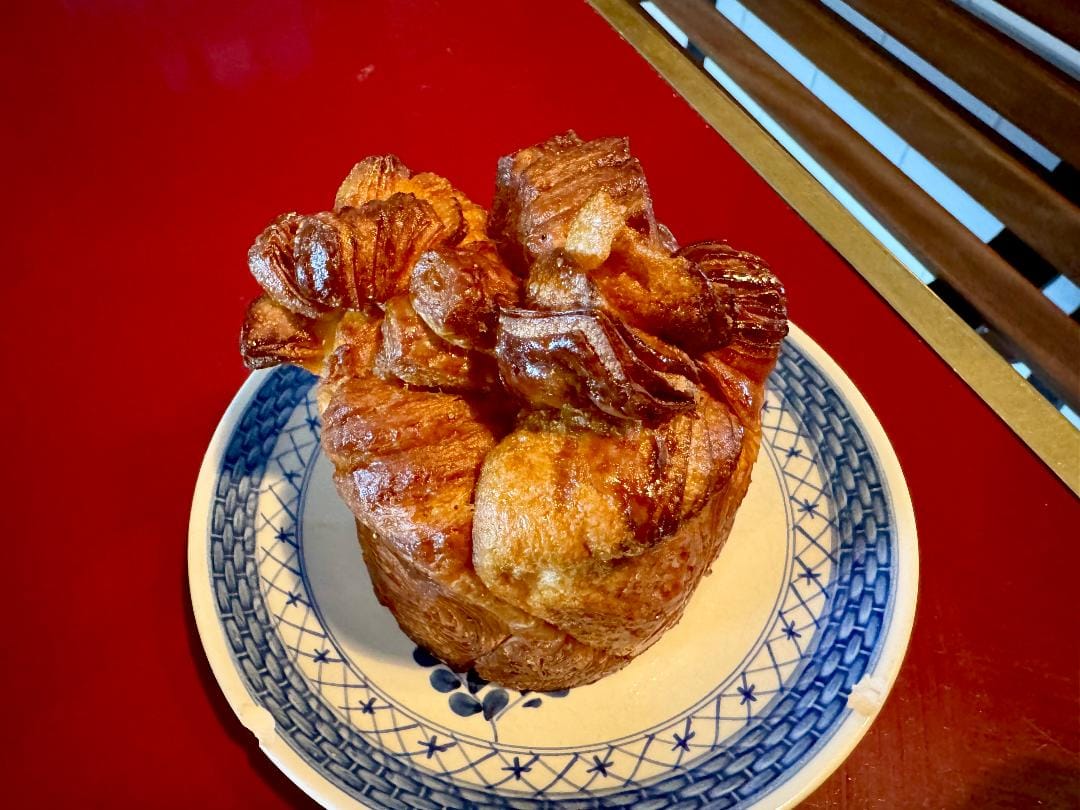
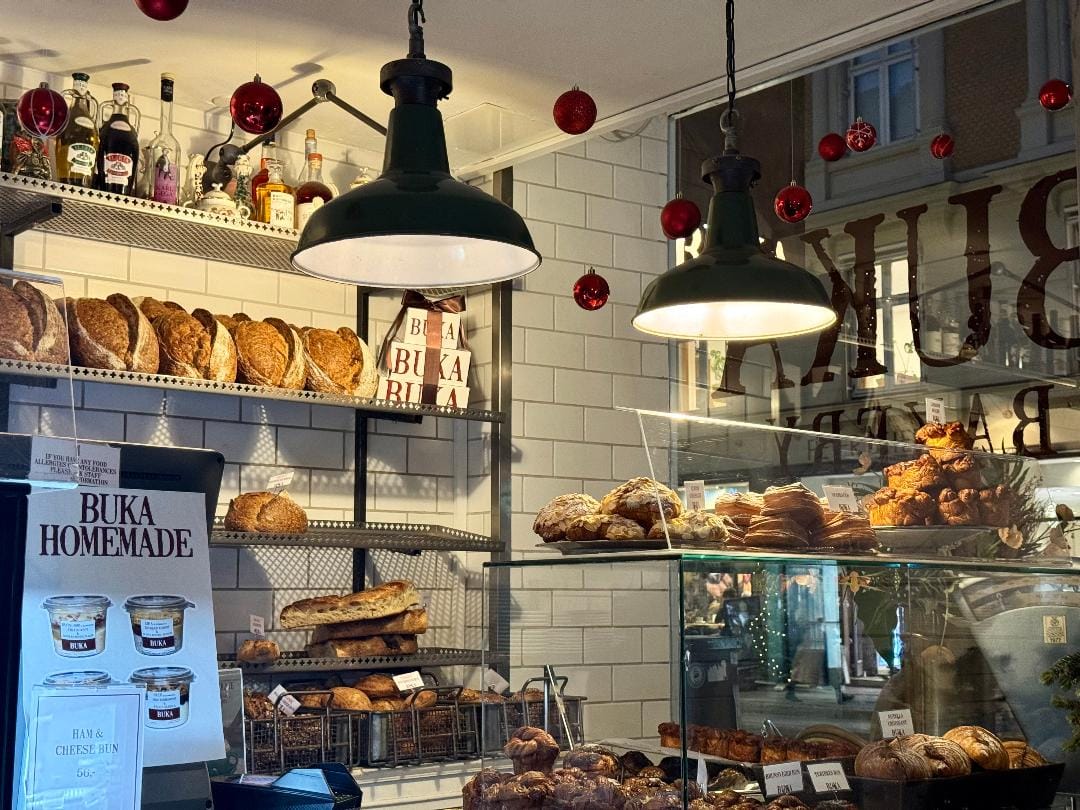
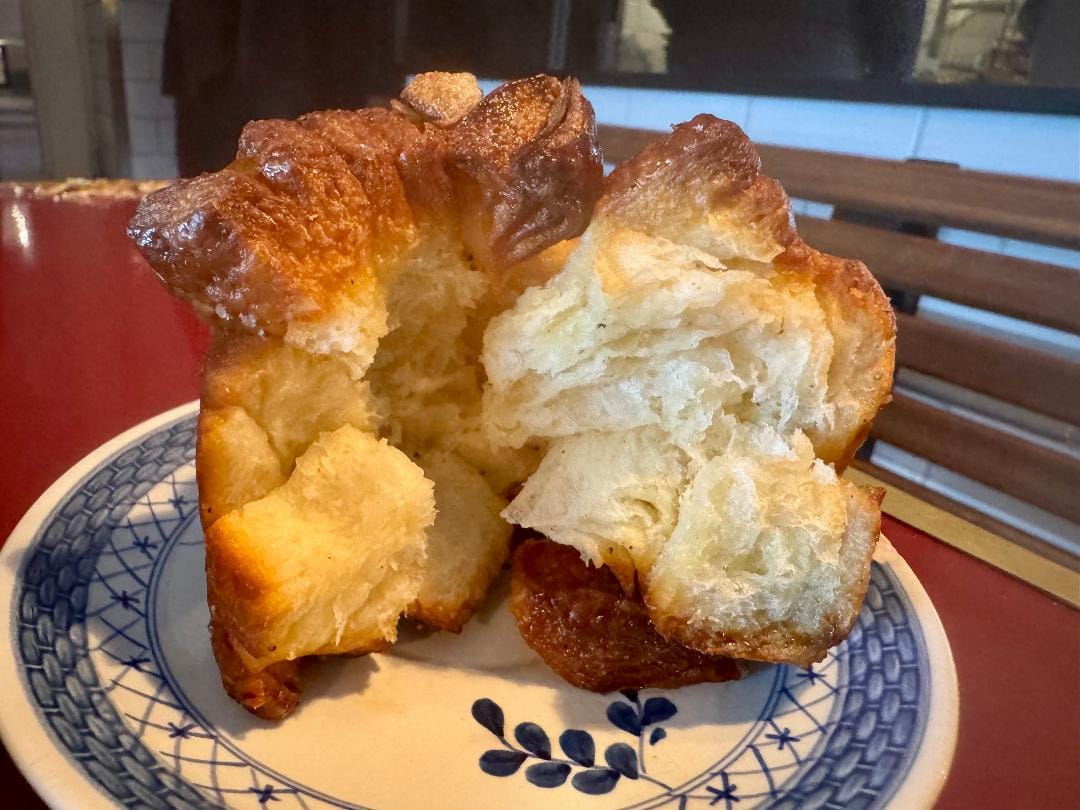
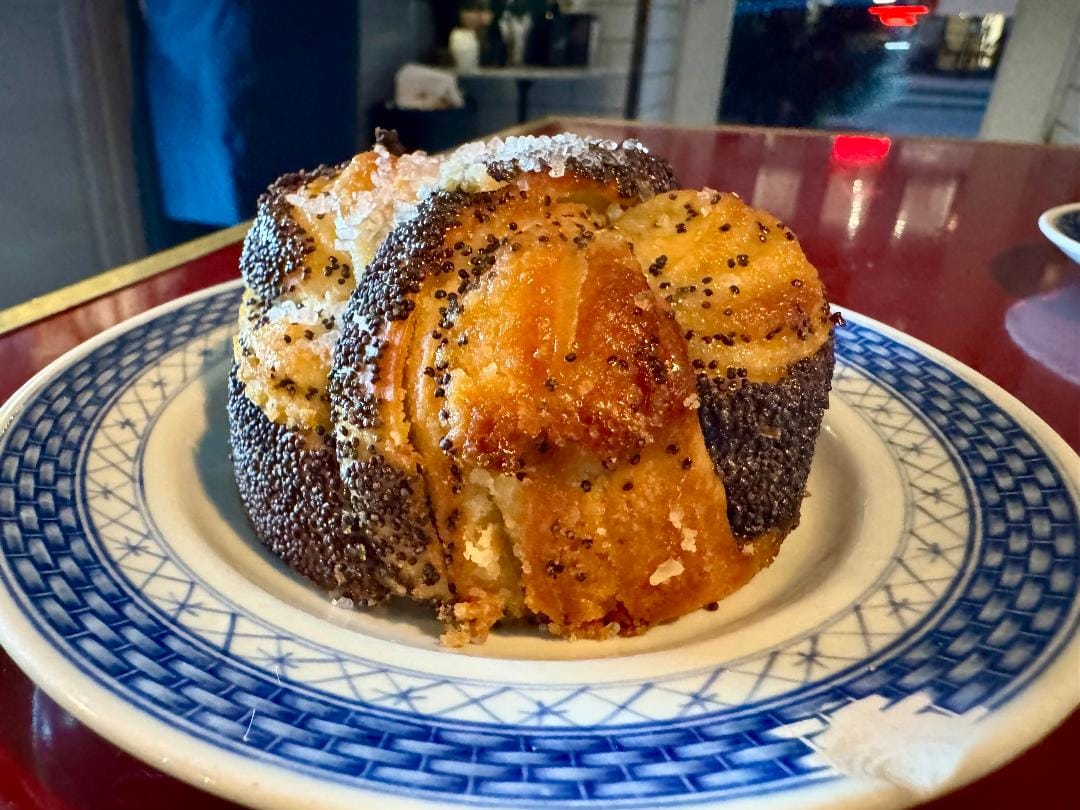
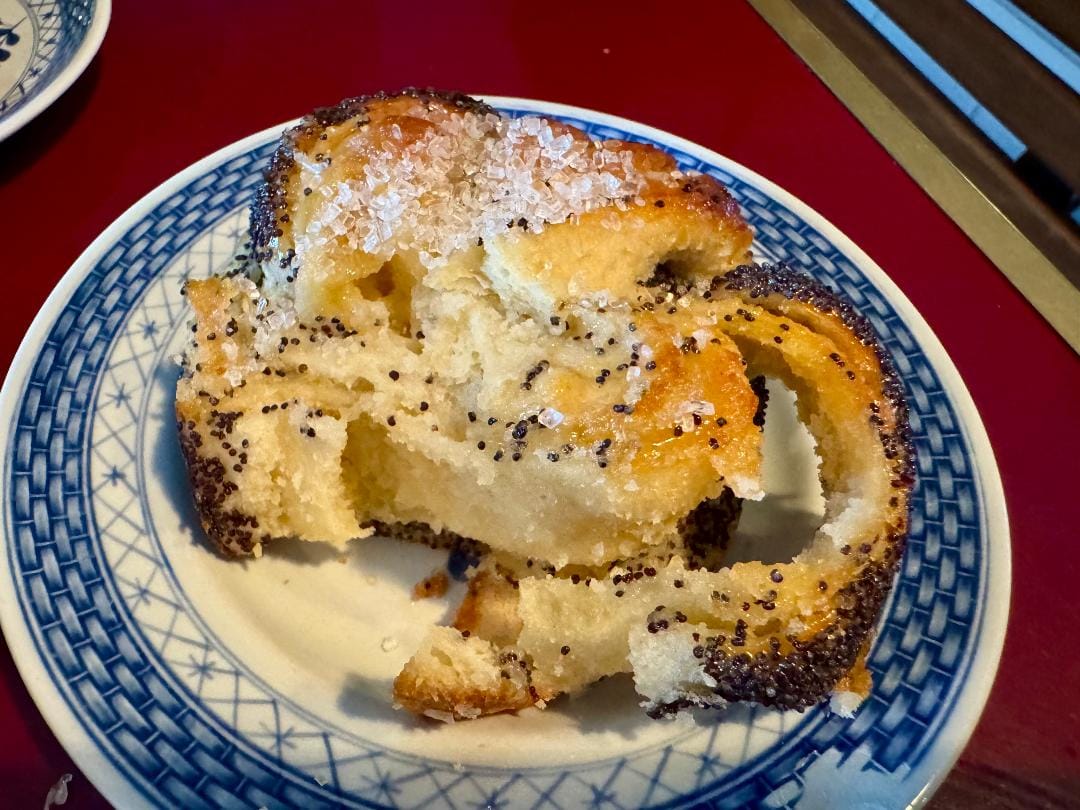
L to R from top: Buka's cardamom bun at their Frederiksberg location in Copenhagen; the counter at Buka; inside Buka's cardamom pastry; the tebirkes poppyseed and marzipan twist at Buka; inside Buka's tebirkes. Photos by Alison Cook
That rich bloom of Danish butter makes a difference, not just in the airy laminated baked goods, but in the cushioned coils of brioche that I love, too. I was too late in the season for the fruit-filled pastries I had fixated on during a 2010 Copenhagen visit, but I managed to make do—most memorably with a spiral wound with cardamom and orange zest, from Hart Bageri. I could eat that particular pastry every morning of my life and never tire of it.
Probably that's because being half-Swedish, the warm, slightly floral, edgily citric scent of cardamom smells like home and comfort to me. Go get the bottle of powdered cardamom (you have one, don't you?) from your spice cabinet and breathe in to experience what I'm talking about.
Hart Bageri baked the most extravagantly flaky cardamom croissant of my two-week trip, which I ate outdoors on their front bench, clutching my absurdly good flat white and watching Danes fly by on their bikes, undaunted by the cold. The complex twists, the shiny glaze, the subtly sweet spice, the deep Maillard hue, the glorious mess...unforgettable.
The irony of Hart Bageri is that it was co-founded (with none other than Noma chef Rene Redzepi) by Richard Hart, a London-born chef who made his name at San Francisco's famous Tartine bakery. Hart has since decamped to Mexico, but his namesake bakery remains stunningly good. I kept returning during my stay, undaunted by the scant indoor seating—so different from the cozy tearoom vibe a few blocks away at Buka.
Every visit, I'd find a new savory tart to take back to the hotel with me. I learned that to snag one of Hart's celebrated daily sandwiches, you had better show up when they're delivered from headquarters at 11 a.m. (Eventually I scored a wild porchetta version layered with a very Nordic, Noma-y sheaf of pickled red cabbage and carrot.)
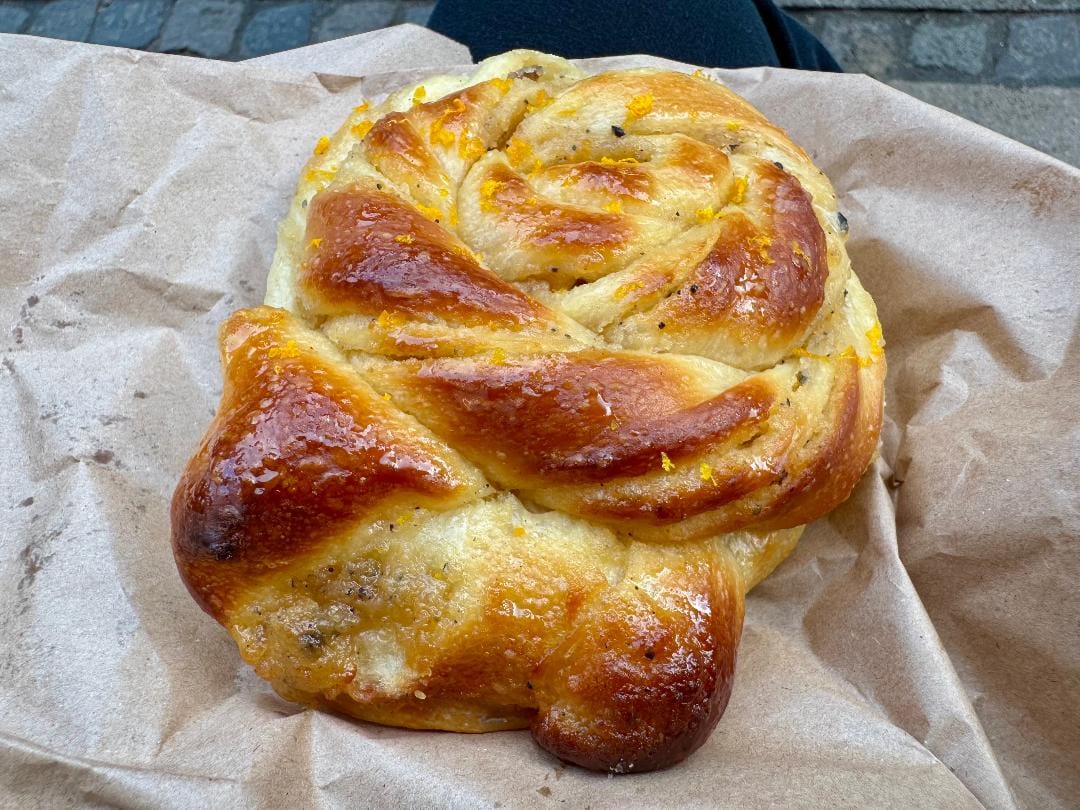
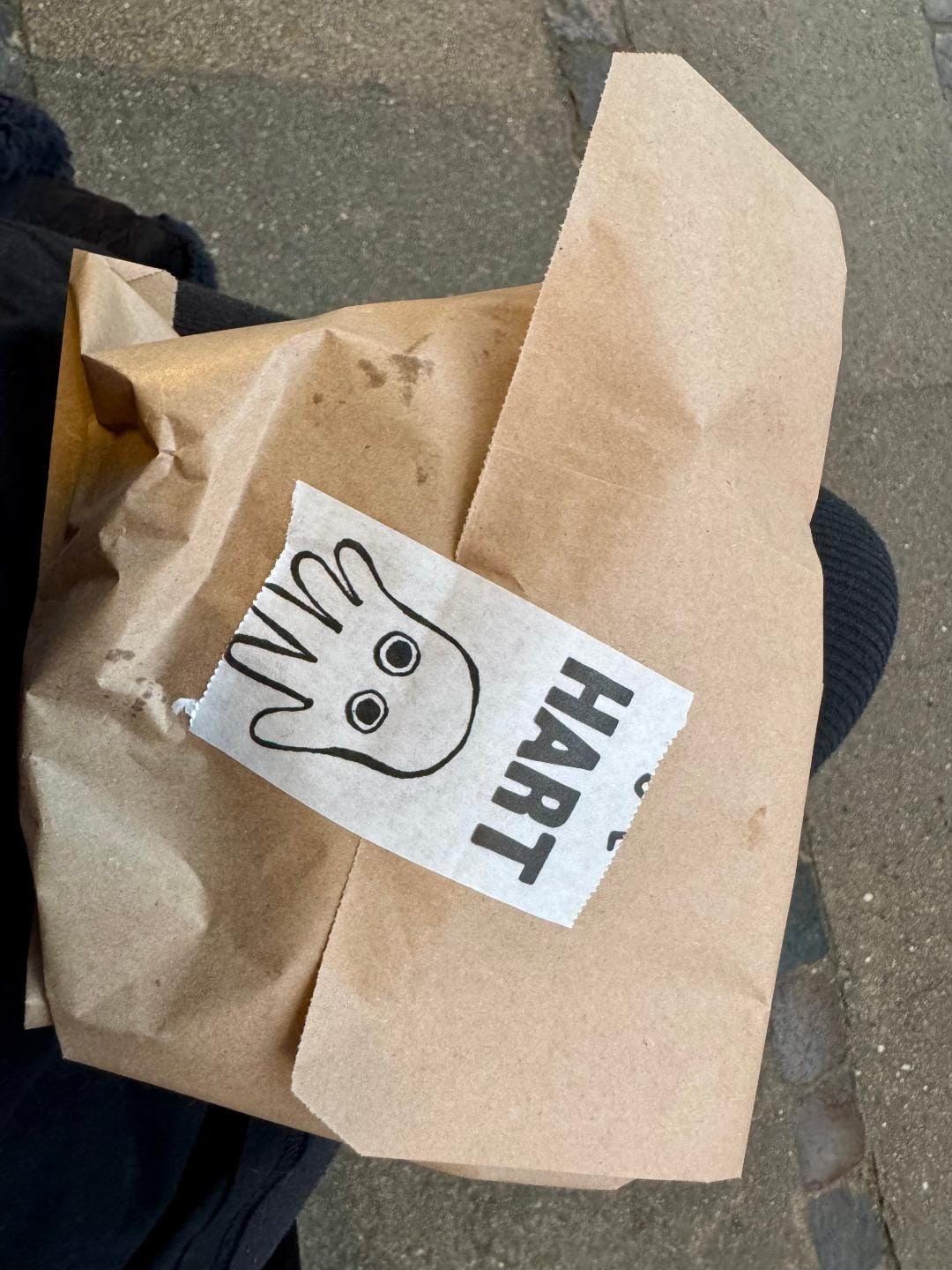
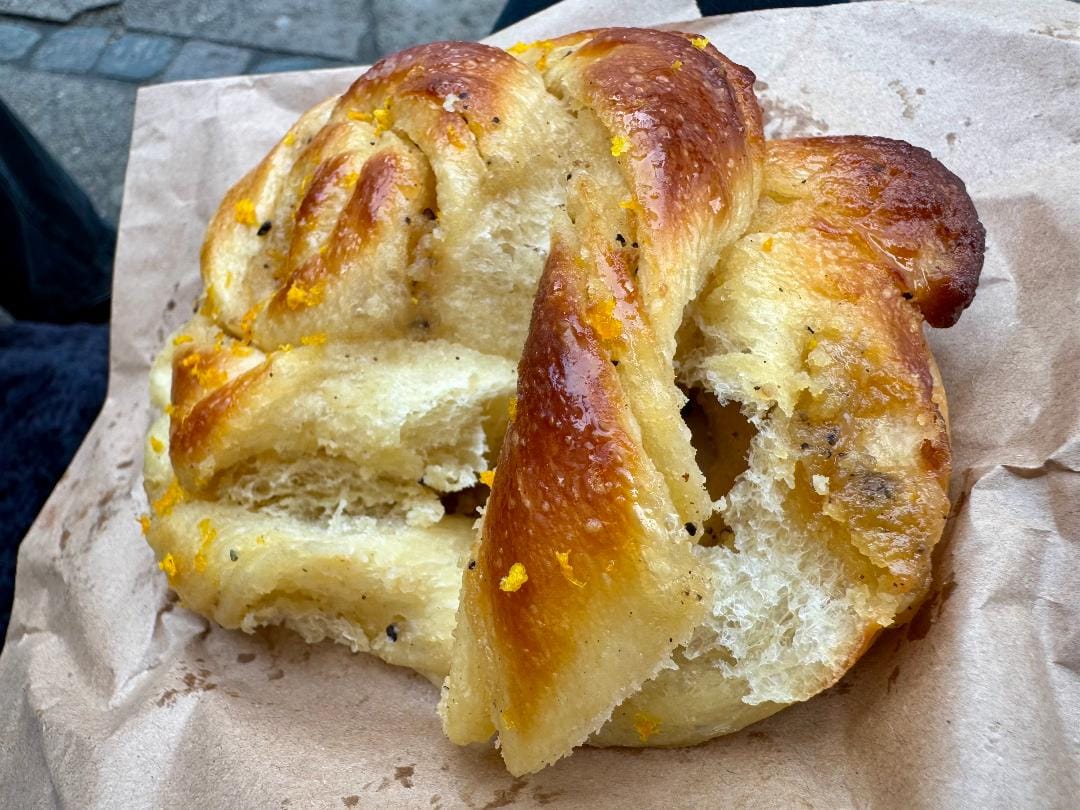
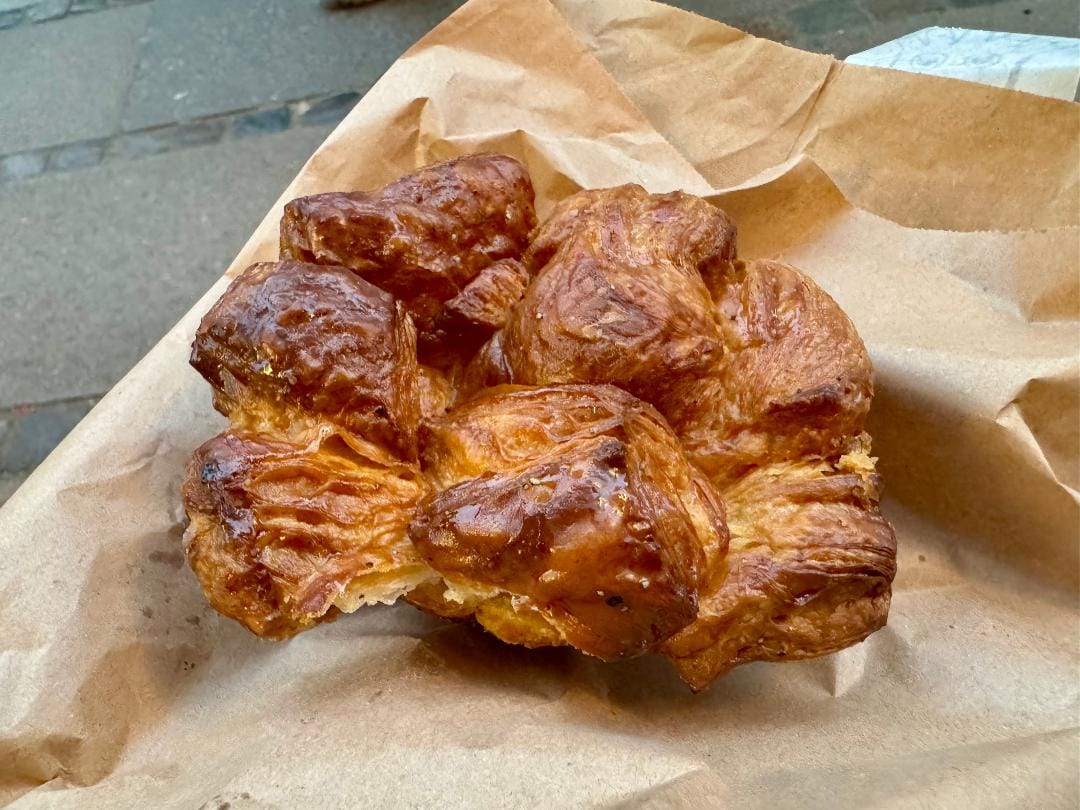
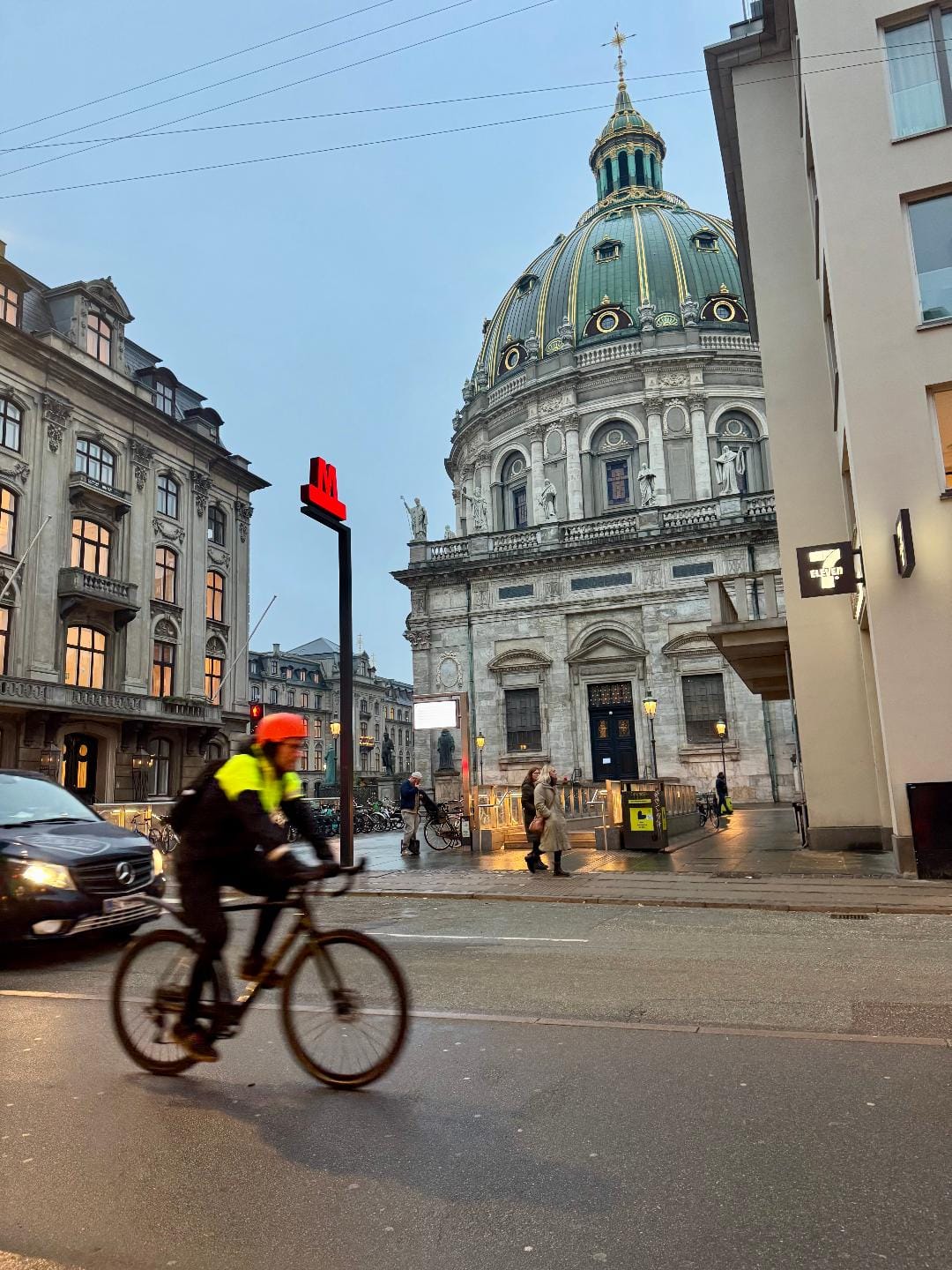
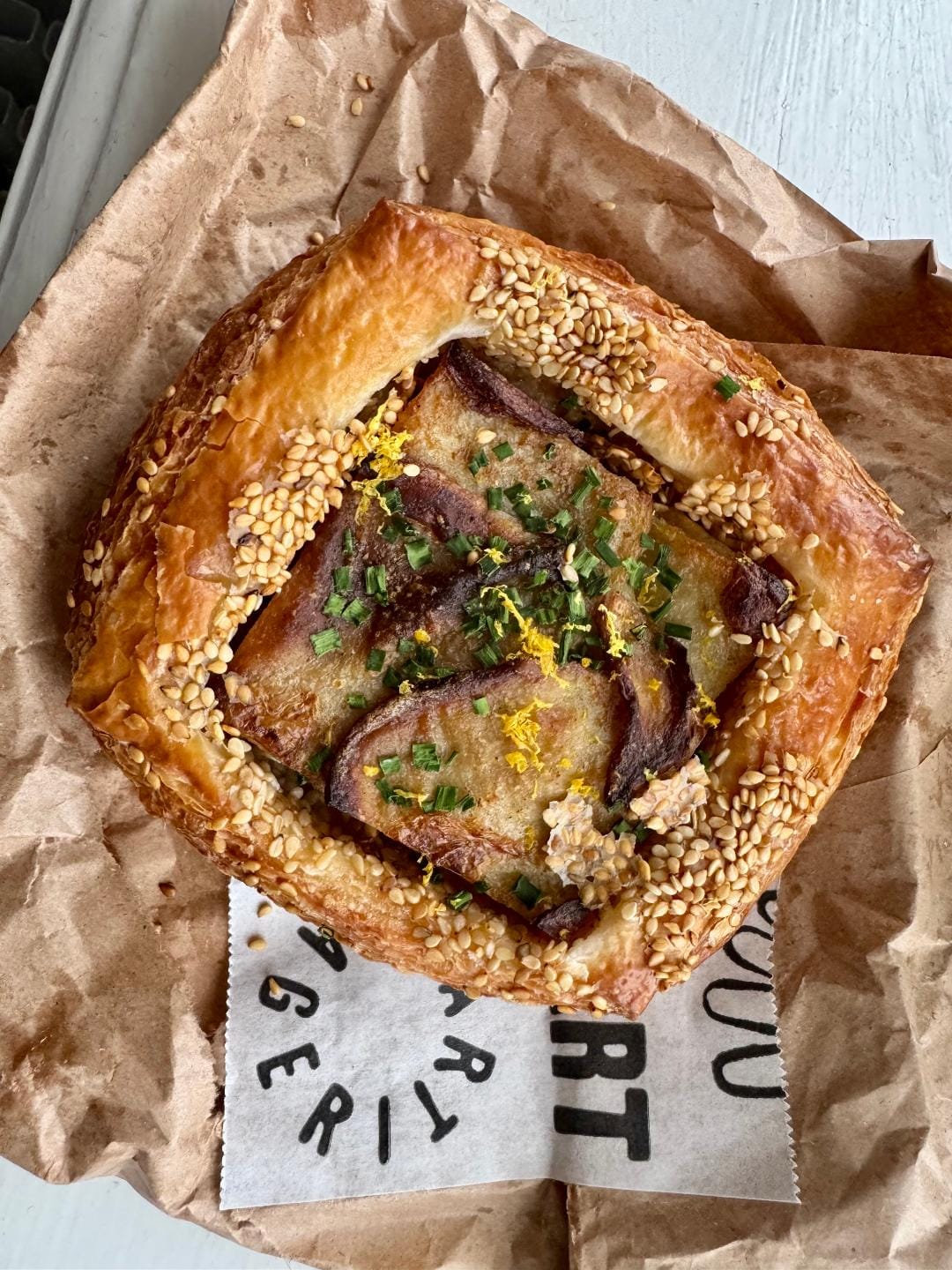
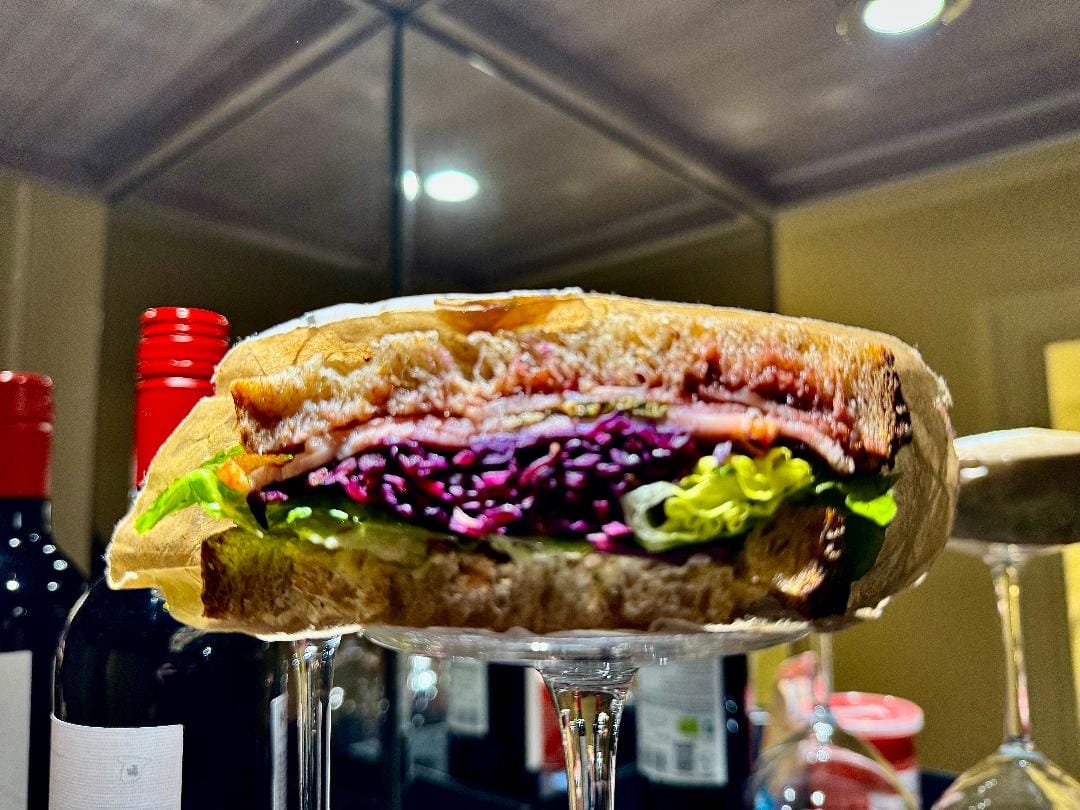
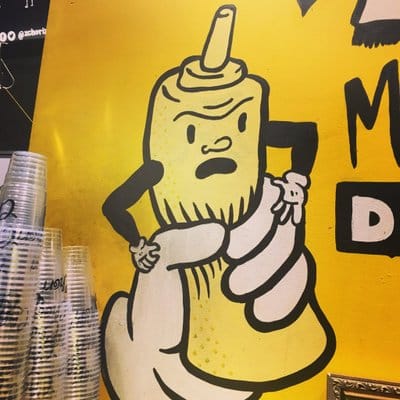
L to R from top: Cardamom and orange zest brioche pastry from Hart Bageri's Frederiksberg location; packaging at Hart Bageri; inside the cardamom twist; Hart Bageri's cardamom croissant; Hart Bageri logo; passing scene from Hart Bageri's outside bench; potato and onion tart at Hart Bageri; the porchetta sandwich from Hart Bageri; Hart Bageri mascot. Photos by Alison Cook
In between Hart and Buka visits, I grabbed Danish pastries wherever I could. At my hotel's lavish breakfast buffet (not bad); from the coffee-shop chain in the city's subway stations (startlingly good). By the time I traveled to the land of my matriarchal forbears, up near Sweden's Norwegian border, I was so desperate to continue my run of pastry consumption that I bought some kind of commercially baked Jul-season marzipan twist at one of the village of Ed's two grocery stores.
That was a mistake.
Where to get quality Viennoiserie back home in Houston? My go-tos are Magnol French Baking, in the industrial wilds of North Post Oak; Mademoiselle Louise for croissants on downtown's southern edge; the laminated cross-cultural treasures at Koffeteria in EaDo; and the savory Levantine ideas at Badolina in Rice Village.
Like Houston, these pastry temples are spread out. No walking five minutes in either direction to score the exalted stuff, more's the pity.
Member discussion