
Why you need a fig tree
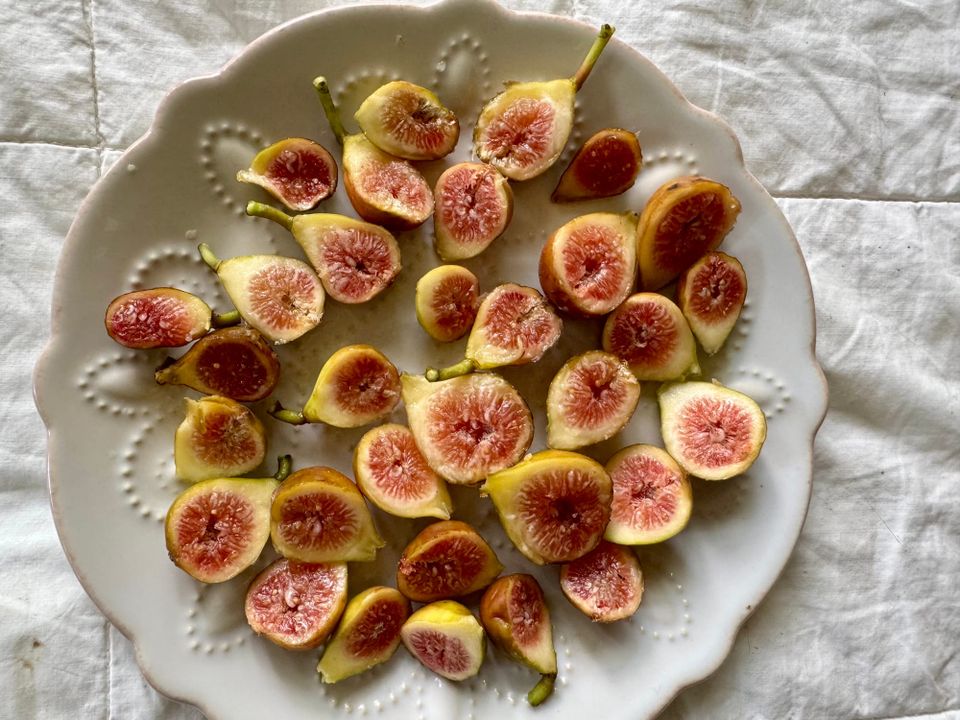
You have a fig tree in your Houston backyard, right?
Right?????
If not, make plans to plant one this fall, after the heat subsides. It will improve your life.
I know because there were two fig trees on my property when I moved to the East End's Idylwood neighborhood in the 80s. Both were the Celeste variety, an old Southern staple that can take our heat and humidity. One ancient, grizzled specimen loomed smack in the middle of the backyard, wide of trunk and spreading of branch. A vigorous junior tree shaded the southeast corner. "You were meant to live here," they seemed to signal me.
When July rolled around, I had so many plump, droplet-shaped figs that they kept me, the squirrels, the ravening jays and cowbirds amply supplied. I ate figs straight from the tree. Or with creme fraiche for breakfast. I pickled them or stewed up a fig and lemon preserve from one of the designer/food maven/Lousiana native Lee Bailey's cookbooks, Country Weekends.
After a Sonoma cafe lunch beneath a venerable courtyard fig tree, I was inspired to bake pizzas lush with ripe figs and creamy Italian blue cheese. As my younger tree spread out, I set a garden table underneath for al fresco meals. During Houston's two-week harvest window, I stayed busy.
As I wrote in the newspaper in 2005:
Most of all, I ate my figs uncooked and unadorned, marveling at their sheer voluptuousness: the underbite of acid beneath the sweetness, the subliminal crunch of seed underpinning the softness, the faintly furred quality of the gorgeous matte skins. Was there any more desirable fruit? One that more fully expressed the strange joys of living in subtropical Texas? I doubted it.
Still do.
Somewhere along the line, trolling through my cookbook library, I came across the brilliant idea of halved figs crowned with goat cheese and black pepper. It's not really a recipe, I guess—a social media scold made fun of me when I wrote here about a beloved breakfast of mine, scoffing that it was just "yogurt, fruit and nuts." (I am guessing she's not a fan of my idol Elizabeth David's cookbooks, which are chock full of freeform ideas and devil-may-care measurements.)
Anyway. Those figs with a spoonful of goat cheese and a flurry of cracked black pepper are a dish I return to again and again. They're a snack, a breakfast, a light lunch. Even a summer supper when you put them on top of arugula leaves glossed with olive oil. The dusky fig sweetness collides with the sharp salt of crumbly goat cheese, then soars on a deep, lingering wave of black-pepper heat. I always marvel at the way the whole exceeds the sum of its parts.
Over the years, I learned that the Celeste figs I prized were pooh-poohed by fig snobs as one-dimensional "sugar figs." Oh, maybe they discerned some melon notes, but the rap is that Celestes lack the berry flavors that fig connoisseurs prize. Seriously, there is a whole online fig community that argues about such matters, exchanging tasting notes and growing tips.
I had no idea about any of that when my two Celeste trees bit the dust, one after the other, leaving me with an LSU Purple sapling I grabbed at a local nursery and finally planted, after dithering about its location. It was said to produce a fall crop after the summer one, which sounded promising. But I had a dog-proof horse fence built that made the tree harder to access. After some disappointing harvests of puny, flat-tasting figs, I lost interest, and left its fruit to the squirrels and birds.
I should have been reading figpotter, who knows a lot about fig trees bred by the famed Louisiana State University program. "The fruit is said to get much better after several years," he notes of LSU Purple. And lo, when I plucked a few ripe figs the week before last, I could taste the difference.
Another online fig maven, figboss, describes LSU Purple thusly: "When properly ripened, LSU Purple is like eating fig jelly combined with melons, mild berries, honey, brown sugar, and cinnamon. The skin can have an interesting spicy flavor." The variety has a shape and skin that's unusually rain-resistant, which must have helped during this summer's June downpours.
All that water inevitably dilutes flavor. I'm not getting all those notes that figboss describes—I kinda doubt I ever will— but this year's fig crop is making me plenty happy. I wake up eager to hunt the ripe ones.
As of this morning, they're still coming. I haven't harvested enough for preserves or pickles or fig-and-armagnac ice-cream yet, but just wait until next year. I plan to clear out the wild grape vines choking the upper third of the tree and let it breathe again.
Maybe I'll even plant a different variety on the other side of the fence, and set out a garden table underneath.
I'm back in the fig game.
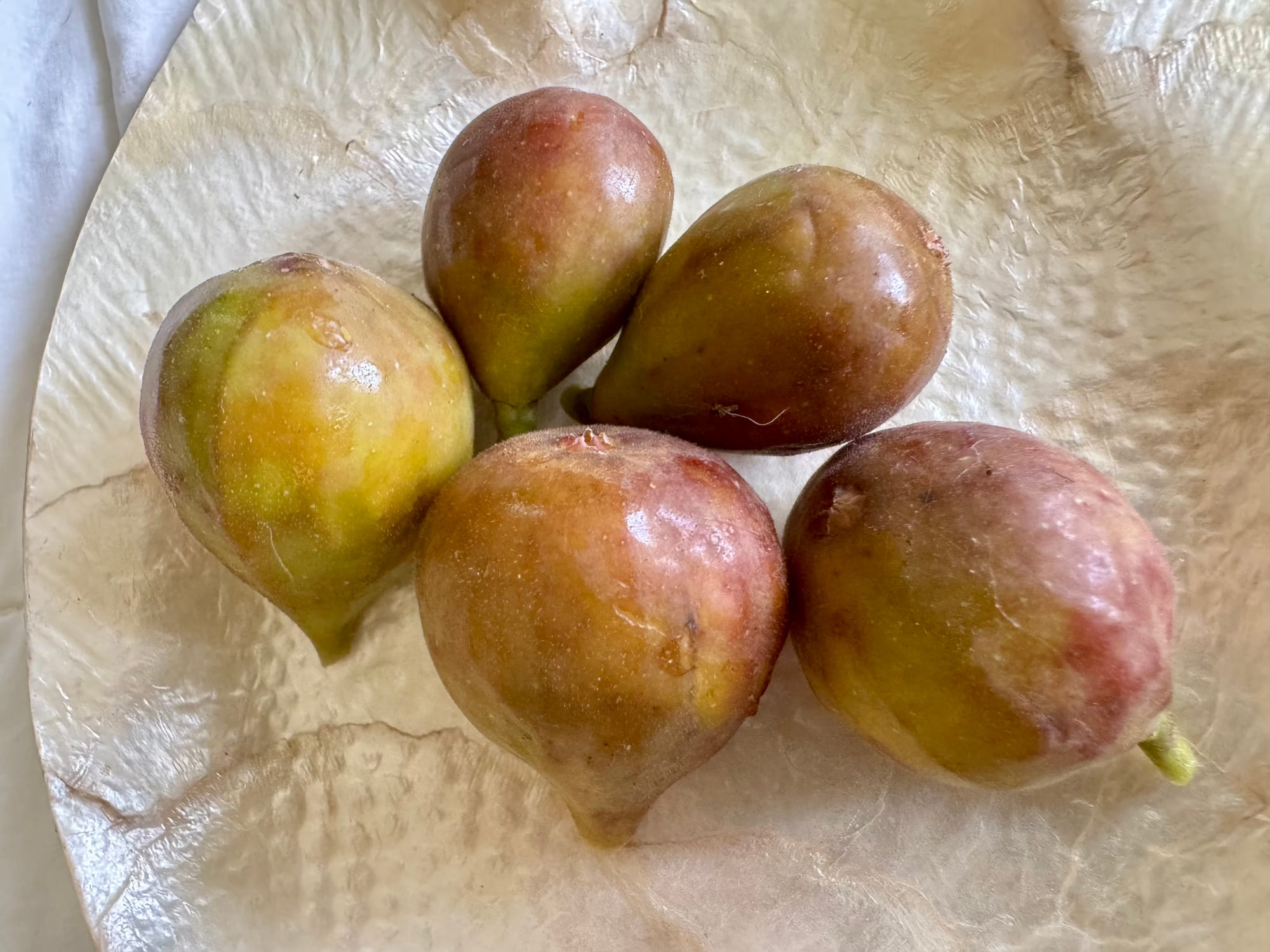
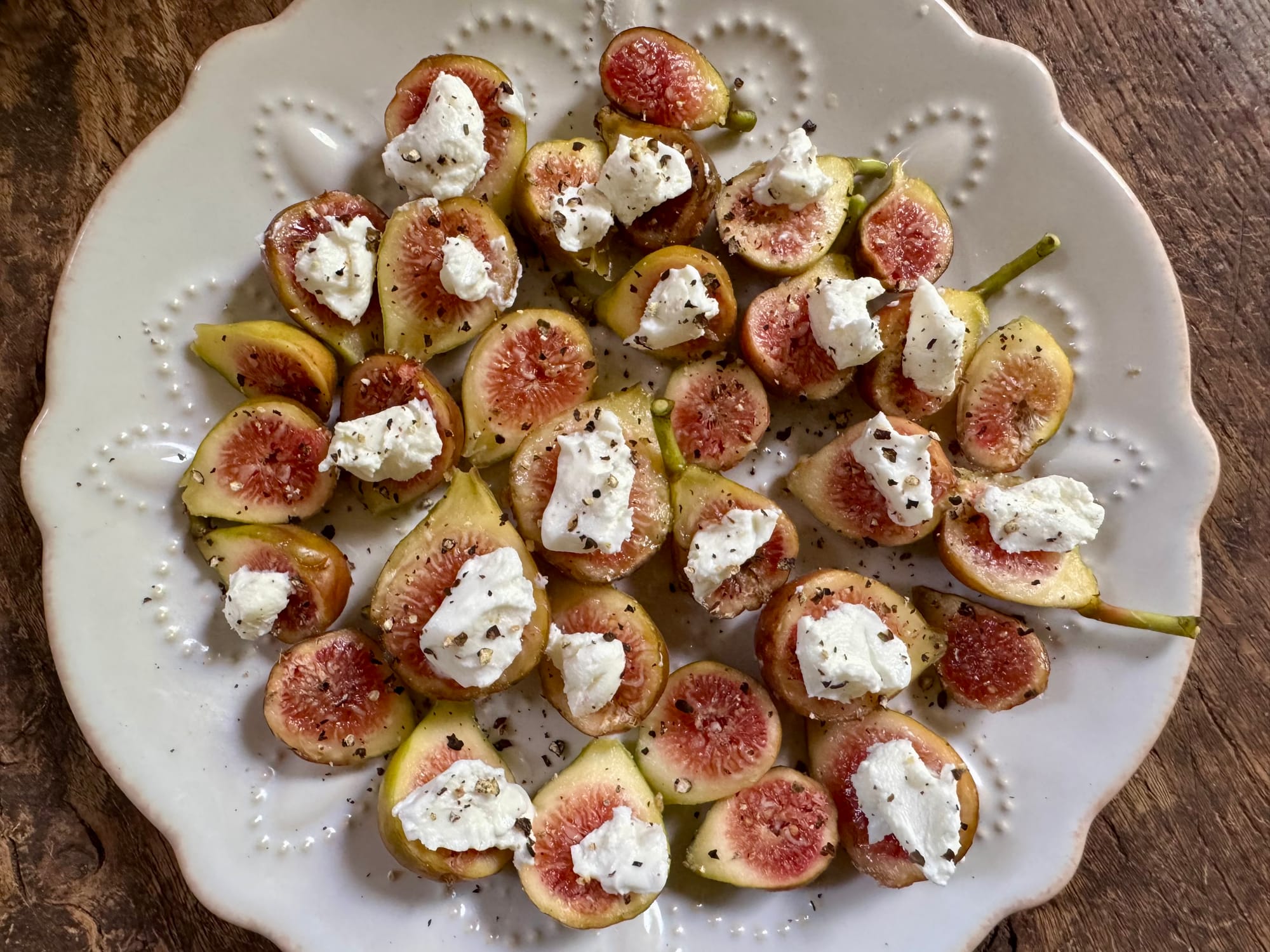
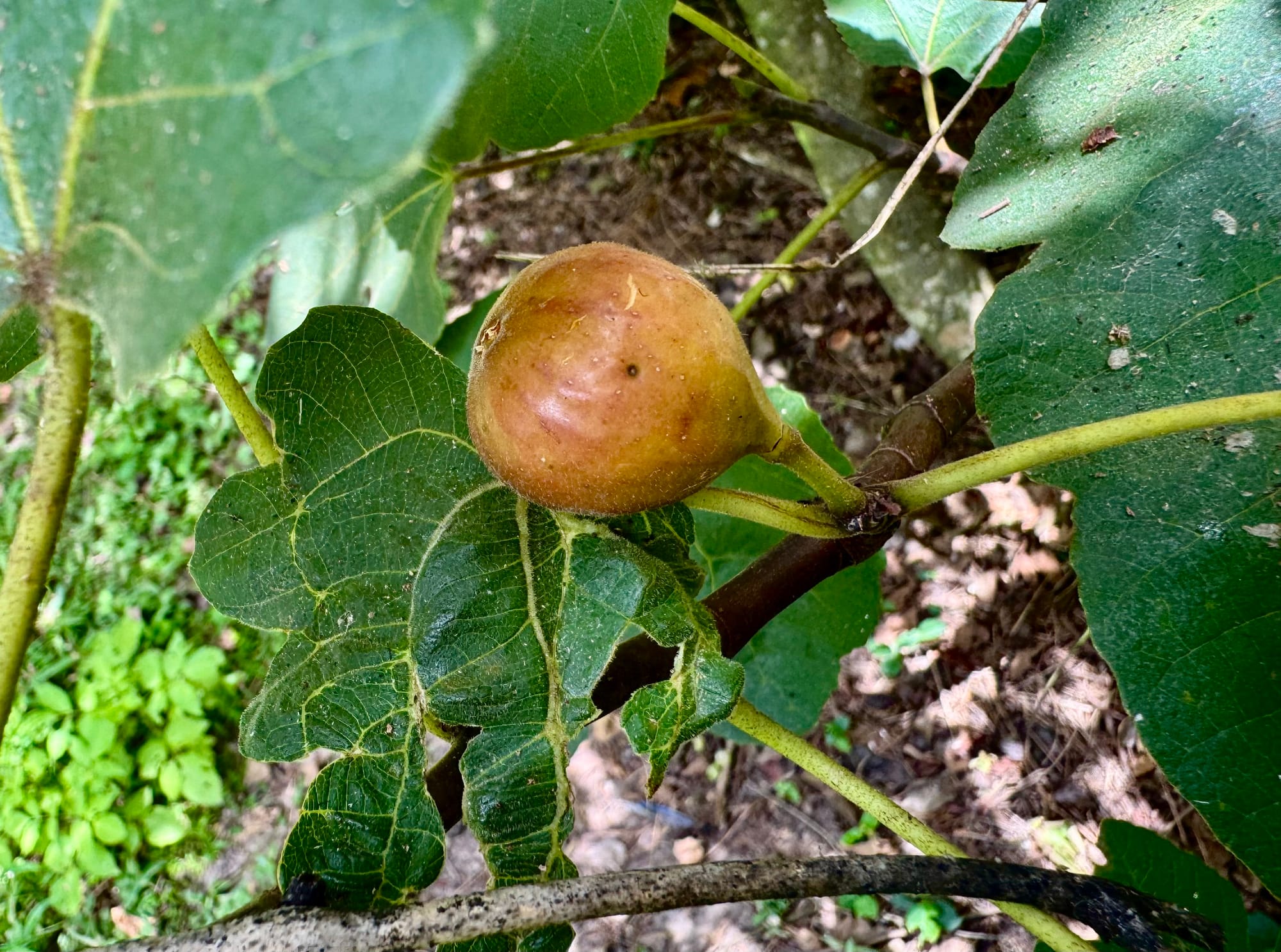
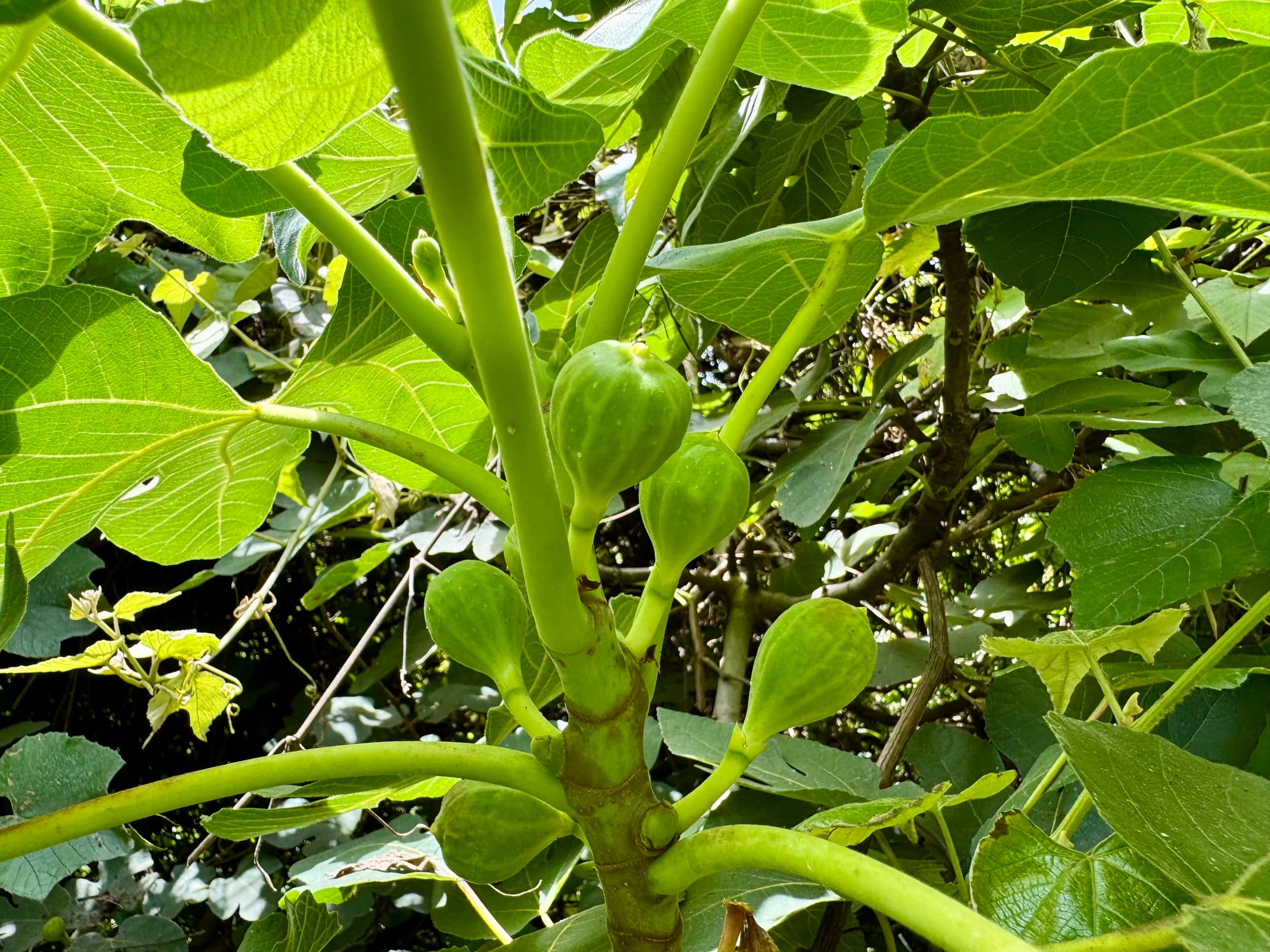
L to R from top: LSU Purple figs fresh off the tree; homegrown figs with goat cheese and cracked black pepper; a fig in situ; figs still coming a few branches over. Photos by Alison Cook
Member discussion